What Warehouse Storage Means in Modern Operations
Warehouse storage is more than “where inventory goes.” It is the foundation of space planning, order accuracy, and throughput. The right system supports your SKU profile, replenishment model, and handling equipment—while keeping your operation flexible as demand changes.
Our approach focuses on practical outcomes: cleaner organization, efficient access, and a layout that supports day-to-day workflows without creating bottlenecks.
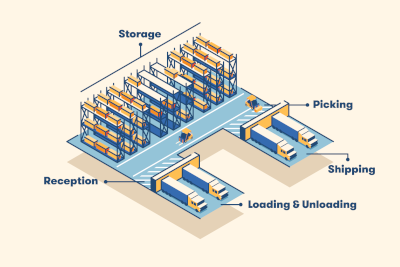
Types of Warehouse Storage Systems
Select systems based on load characteristics, access frequency, handling method, and available footprint. Below are common configurations used across U.S. industrial environments.
Pallet Racking
Designed for palletized inventory with forklift access and high-load requirements.
Industrial Shelving
Ideal for hand-picked cartons, mixed SKU storage, and organized bin workflows.
High-Density Storage
Optimizes space for high-volume operations where footprint efficiency is critical.
Modular Systems
Configurable components that evolve with changing inventory profiles and layouts.
Warehouse Storage by Operation Type
Different facilities prioritize different outcomes: speed, density, flexibility, or safety. Use-case design keeps storage practical and scalable.
Distribution Centers
Built for throughput, replenishment cycles, and predictable pallet flow.
Retail & Wholesale Warehouses
Supports mixed SKUs, staged inventory, and backroom organization.
E-commerce Fulfillment
Optimized for pick density, slotting strategies, and fast order processing.
Industrial Facilities
Durable storage for parts, components, tools, and production support inventory.
Load Capacity, Materials, and Durability
Material choices impact lifespan, stability, and maintenance. Below is a practical comparison used for planning and specification.
| Material / Finish | Durability | Typical Use | Operational Notes |
|---|---|---|---|
| Powder-Coated Steel | High | General warehouse storage | Balanced corrosion resistance and long-term performance. |
| Galvanized Steel | Very High | Humid or demanding environments | Improved corrosion resistance for harsh conditions. |
| Heavy-Duty Steel Components | Very High | High-load zones | Used where load requirements and impact risk are higher. |
Custom Warehouse Storage Design Process
Effective warehouse storage starts with operational inputs—SKU profile, handling equipment, access frequency, and growth plans. We translate those requirements into a layout that supports today’s workflow and tomorrow’s scale.
- Recommended storage system type(s)
- Zone-based layout guidance
- Capacity planning assumptions
- Expansion-ready configuration
Frequently Asked Questions
Request a Warehouse Storage Consultation
Tell us about your operation and goals. We’ll recommend a practical warehouse storage approach aligned with your inventory, layout, and growth plan.